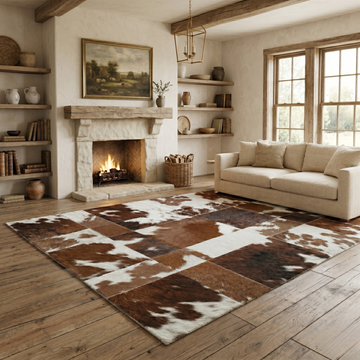
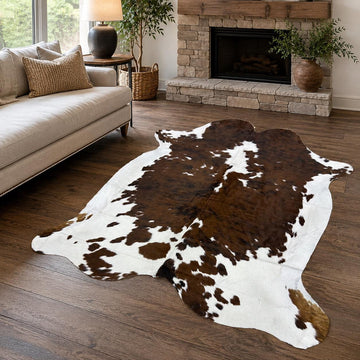





This is the question that many cowhide brands either avoid or answer with spin. We're going to answer it directly, honestly, and with the nuance it deserves, because the real answer is more considered than either 'yes, completely' or 'no, never'.
If you're asking if cowhide rugs are ethical, what you're really asking is: are cattle harmed specifically for the rug industry? Do cowhide producers operate responsibly? And how does genuine cowhide compare to synthetic alternatives on sustainability? Let's go through each of these.
In this guide:
- The byproduct argument: what it means and why it matters
- How cowhide rugs are actually sourced
- Tanning methods and their environmental impact
- Is cowhide more sustainable than faux?
- What ethical sourcing actually looks like
- Questions to ask a brand before you buy
The Core Question: Are Animals Harmed for Cowhide Rugs?

The answer is unambiguous: cattle are not raised or killed specifically for the rug or leather goods industry. Cowhide is a byproduct of the beef industry.
The animals whose hides become rugs, belts, shoes, and leather goods are raised for meat. Without the leather and hide industry, those skins would be discarded as waste, millions of tons annually. The rug industry takes what would otherwise be thrown away and puts it to use.
The Byproduct Fact
The global beef industry produces approximately 5.3 million tons of raw cattle hides annually as a byproduct. Without industries that use these hides, including the rug market, the vast majority would go to landfill or waste-to-energy incineration.
This does not mean all cowhide sourcing is equivalent. There are meaningful differences between producers in how cattle are raised, how hides are handled, and how the tanning process is managed. These differences matter ethically, but they are differences of degree within a fundamentally byproduct industry, not a fundamental ethical breach.
How Cowhide Rugs Are Sourced
Country of Origin Matters
The welfare standards governing cattle farming vary significantly by country. Brazilian hides, which are widely regarded as the global quality benchmark, come from farms operating under Brazil's agricultural regulations. European hides (from Germany, Italy, and Spain, among others) benefit from some of the strictest animal welfare standards in the world.
Hides from some other regions are produced under much less regulated conditions. A brand that is transparent about the country of origin is almost always operating more responsibly than one that isn't.
The Tanning Process
The tanning process is where environmental impact varies most significantly between producers. There are two primary methods:

Vegetable Tanning
Uses plant-based tannins, oak bark, mimosa, chestnut, or quebracho. The process takes weeks to months, uses fewer harsh chemicals, and produces a biodegradable leather. The wastewater from vegetable tanning operations is significantly less toxic than that from chrome tanning. It is more expensive and slower, but is considered the more environmentally sound approach.
Chrome Tanning
Uses chromium salts to tan the hide quickly (typically 24 hours). The vast majority of commercial leather and cowhide rugs are chrome-tanned. Chrome tanning is faster and produces a softer, more uniform result. The environmental concern is the management of chromium-containing wastewater, properly treated, which is manageable; improperly treated (common in some lower-cost production regions), it is a significant pollutant.
When evaluating a brand on sustainability, asking about their tanning method and wastewater management is one of the most meaningful questions you can ask.
Is Cowhide More Sustainable Than Faux?

This comparison is more nuanced than it first appears, and the answer may surprise ethical consumers.
The Case for Genuine Cowhide as the More Sustainable Choice

-
It uses a material that would otherwise be wasted; the byproduct argument is a real sustainability benefit
-
Genuine cowhide is 100% biodegradable at end-of-life, and it will break down naturally in soil
-
A quality genuine hide lasts 15 - 25 years. A faux rug lasts 2 - 5 years, meaning multiple replacements and multiple units going to landfill over the same period
-
Genuine cowhide is not made from petroleum; it has no microplastic shedding
The Case for Faux as the More Ethical Choice
-
No direct animal product involvement
-
For buyers with strong animal welfare concerns, this is a legitimate ethical position.
-
Lower water usage in manufacturing compared to leather tanning
The Reality
Most faux cowhide rugs are made from polypropylene or polyester, petroleum-derived plastics that shed microplastics throughout their use, do not biodegrade, and are currently not widely recycled. The environmental cost of manufacturing synthetic textiles at scale is substantial.
On a full lifecycle analysis, from raw material extraction through to end-of-life, a long-lasting, genuine cowhide rug from a responsibly managed source almost certainly has a lower total environmental impact than multiple synthetic replacements over the same period.
What Ethical Sourcing Actually Looks Like

Here is what to look for when evaluating whether a cowhide brand operates ethically:
-
Transparency about the country of origin, they should be able to tell you where the hides are sourced
-
Tanning method transparency, vegetable or chrome tanning, and wastewater management practices
-
Confirmation that hides are byproducts of the food industry, not from animals raised solely for their skins
-
Grade A selection standards and proper quality control indicate a supply chain with oversight and standards
-
No use of endangered species, cowhide should be exactly that: from cattle. Hides marketed as 'exotic' without clear species identification should be questioned.
What About Karelias & Sons?
We are transparent about our sourcing because we have nothing to hide. Every Karelia rug uses hides sourced as byproducts of the beef industry, selected from Grade A tannery suppliers who meet our quality and process standards. We use chrome-tanned hides from established tanneries with proper wastewater treatment facilities.
We believe the most honest thing we can say is this: buying a genuine Karelias cowhide area rug is a more environmentally sound decision than buying a cheap synthetic alternative that will need replacing every three years.
Questions to Ask Any Cowhide Rug Brand
-
Where are your hides sourced from? Which country?
-
Are these hides byproducts of the beef industry?
-
What tanning method do you use?
-
Can you tell me about your tannery's environmental practices?
-
Are these Grade A hides?
A brand that can answer these questions clearly and without deflection is operating responsibly. A brand that cannot, or will not, answer them is worth approaching with more caution.
FAQ
Is buying a cowhide rug the same as supporting the fur industry?
No. The fur industry raises animals specifically for their pelts, often under conditions designed purely for pelt quality. Cowhide is a byproduct of the beef industry: the animal's primary purpose is meat. The distinction is ethically significant.
Are cowhide rugs vegan?
No. They are an animal product. For buyers who follow a vegan lifestyle, faux cowhide or plush rugs are the appropriate alternative. We carry a range of plush options for exactly this purpose.
What is the most sustainable type of rug overall?
A well-sourced natural material rug that lasts a long time. This includes genuine cowhide, quality wool, and natural fibre rugs (jute, sisal, seagrass). The least sustainable choice is a cheap synthetic rug that needs replacing every few years.
Do cowhide rugs smell of chemicals?
A quality, properly tanned cowhide has a subtle, clean leather scent that dissipates within days. A strong chemical smell indicates either poor tanning practices or a faux rug that has been treated with synthetic compounds. This is a quality indicator worth paying attention to.
About This Article
Written by the Karelias & Sons team, craftspeople with decades of experience handmaking leather and hide rugs. Every piece of advice in this guide is based on the actual materials, processes, and customer questions we encounter every day.