


You've seen them in interior design magazines, on Pinterest boards, and in that beautifully decorated home you couldn't stop staring at. Cowhide rugs have moved far beyond their rustic roots. Today, they anchor modern living rooms, add warmth to minimalist bedrooms, and bring character to everything in between.
Yet for all their popularity, they remain misunderstood. Are they durable? Are they ethical? Is a genuine cowhide worth the investment over a faux alternative? And once you have one, how do you look after it?
This guide answers every question you have before and after your purchase. By the end, you'll know exactly what to look for, what to avoid, and how to choose the perfect hide for your home.
TABLE OF CONTENTS
- What Is a Cowhide Rug?
- Types of Cowhide Rugs: Natural, Patchwork, Round & More
- Genuine vs Faux Cowhide Rugs: The Honest Comparison
- Cowhide Rug Sizes: Which Size Is Right for Your Room?
- Cowhide Rug Placement: The Designer's Room-by-Room Guide
- Styling Your Cowhide Rug: Interior Design Pairings That Work
- How Long Do Cowhide Rugs Last?
- How to Clean a Cowhide Rug: The Essential Care Guide
- Are Cowhide Rugs Ethical? Sourcing & Sustainability Explained
- How to Spot a High-Quality Cowhide Rug Before You Buy
- Cowhide Rug Price Guide: What to Expect at Each Budget Level
- Frequently Asked Questions
What Is a Cowhide Rug? (And Why It's Not Just a Western Trend)

A cowhide rug is, at its simplest, the preserved skin of a cow, complete with its natural hair, markings, and unique shape. The hide is treated through a tanning process that stabilises the material, makes it soft and supple, and prepares it for decades of use on your floor.
But here's what makes cowhides genuinely special: no two are alike. Every pattern, every colour variation, every marking is determined by the animal itself. That means the rug you bring home is, quite literally, a one-of-a-kind object. You will never find another one exactly like it anywhere in the world.
Cowhides have been used in homes for thousands of years; they are, arguably, the oldest form of interior design in human history. What's changed is the context. Today, they sit just as naturally in a Scandinavian-inspired loft apartment as they do in a ranch-style living room. The design world has caught up with what generations of craftspeople already knew: a well-made cowhide rug is timeless.
Why Are Cowhide Rugs So Popular Right Now?
The resurgence of interest in natural materials, driven by a growing preference for authentic, tactile home décor over mass-produced synthetics, has brought cowhide rugs into the mainstream spotlight. Interior designers increasingly specify them because they provide texture, warmth, and personality that no manufactured rug can replicate.
They're also genuinely practical. Cowhide is naturally hypoallergenic, resistant to stains, and far more durable than most textile-based rugs. For busy households with children and pets, that combination is hard to beat.
Types of Cowhide Rugs: Natural, Patchwork, Round & More

Not all cowhide rugs are the same. Understanding the different types helps you match the right rug to your space, your style, and your budget.
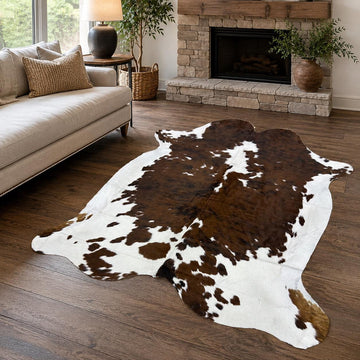
Natural/Whole Cowhide
This is a single, uncut hide in its natural shape, broader in the middle and tapering towards the head and tail. Natural cowhides come in a wide range of patterns: tricolour (black, white, and brown), brindle, salt and pepper, palomino, all-black, and all-white, among others. The irregular shape is part of the appeal; it adds organic visual interest that rectangular rugs simply can't offer.
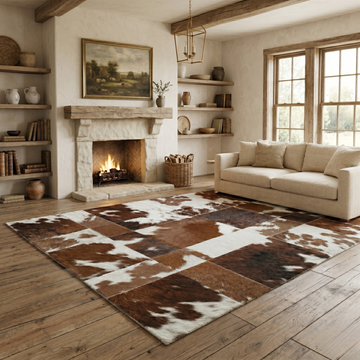
Patchwork Cowhide Rugs
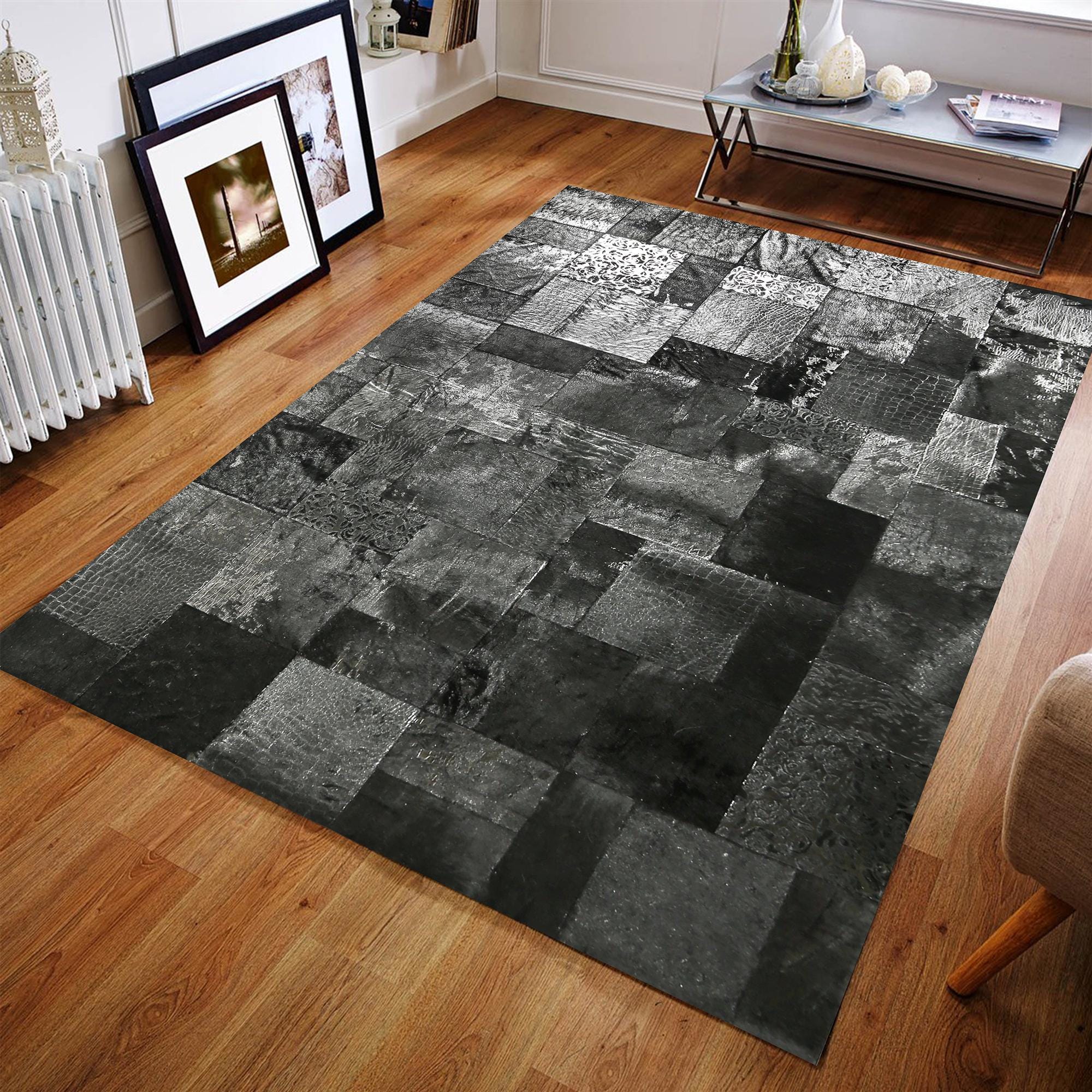
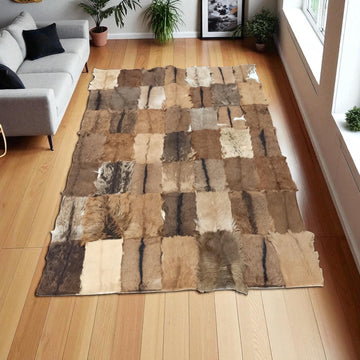
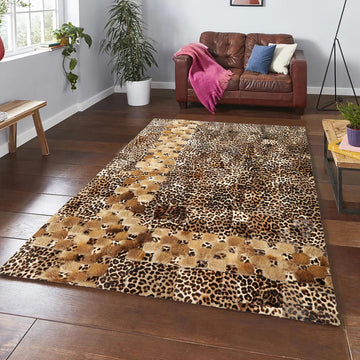
Patchwork rugs are made by cutting individual hides into geometric shapes, squares, diamonds, hexagons, chevrons, and stitching them together into a single rectangular rug. The result is a more structured, design-forward piece that suits contemporary and transitional interiors. Patchwork cowhide is the handcraft at its most labour-intensive: at Karelias & Sons, each patch is individually selected, cut, and stitched by hand to ensure colour consistency and seam strength.
Round Cowhide Rugs
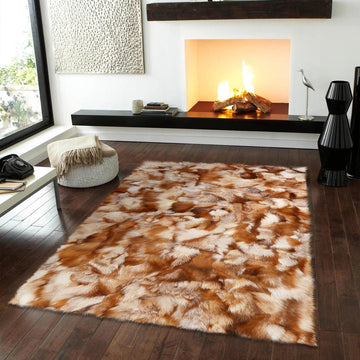
Round cowhide rugs are a modern interpretation of the classic hide. Cut into a circular shape (typically 40 inches or larger in diameter), they work beautifully under round coffee tables, in reading nooks, or as a defining feature in open-plan spaces. Round hides in patchwork, natural, or fox fur variants all suit different interior styles.
Cowhide Peltry Rugs
Peltry rugs use multiple smaller hide sections pieced together into a larger carpet-style rug. They offer the natural character of genuine cowhide at a broader range of sizes, making them ideal for covering larger floor areas without compromising authenticity.
Genuine vs Faux Cowhide Rugs: The Honest Comparison
The question of real cowhide rug vs faux comes up in almost every buyer's journey, and the honest answer is: both have their place. It depends on what matters most to you.

Genuine Cowhide: What You Get
A real cowhide rug offers something no synthetic product can replicate: the organic variation of a natural material that has been alive. The hair has a directional quality, the backing has a supple leather feel, and the pattern is genuinely unique. Real hides are more durable over time, develop a richer patina with age, and are naturally hypoallergenic; they don't trap dust, dander, or allergens the way fabric rugs do.
The trade-off is price and occasional sensitivity in households where animal-derived products are a concern.
Faux Cowhide: When It Makes Sense
High-quality faux cowhide has improved dramatically. For renters who move frequently, households with very young children, or buyers with a specific ethical preference, a well-made plush or faux hide can deliver the visual aesthetic at a lower price point and with easier maintenance. The key phrase is 'well-made'; cheap faux rugs flatten quickly, lose their print definition, and don't age gracefully.
How to Tell Them Apart
- Flip the rug over. Real cowhide has a soft, suede-like leather backing. Faux will have a woven or canvas backing.
- Run your hand against the direction of the hair. Genuine cowhide has a distinct directional texture.
- Smell it. Real leather has a subtle, earthy scent. Faux may smell of synthetics or fabric treatment.
- Look at the edges. A genuine hide has an irregular, organic silhouette. Faux hides are often perfectly rectangular.
Cowhide Rug Sizes: Which Size Is Right for Your Room?

Getting the size wrong is the single most common cowhide buying mistake. A rug that's too small looks like an afterthought. One that's too large overwhelms the space.
Natural cowhides don't come in standardised cowhide rug sizes; they're measured by the animal. Here's how to think about size:
Size Reference Guide
- Small (approx. 3×4 ft - 4×5 ft): Suitable for entryways, reading nooks, under a single accent chair, or as a bathroom mat.
- Medium (approx. 5×6 ft - 6×7 ft): The most versatile size. Works well under a coffee table in a medium living room, in a dining area for a small table, or as a bedroom accent.
- Large (approx. 7×8 ft and above): Ideal for open-plan spaces, larger living rooms, and dining rooms with 6+ seat tables. Karelias & Sons offers custom sizing for spaces that require specific dimensions.
The Room-by-Room Size Rule
For living rooms, the rug should be large enough for at least the front legs of all main seating pieces to sit on it. For dining rooms, ensure the rug extends at least 24 inches beyond the table edge so chairs remain on the rug when pulled out. In bedrooms, a rug placed two-thirds of the way under the bed, extending about 18 - 24 inches on each side, creates the most elegant look.
Patchwork and peltry cowhide rugs are available in custom sizes, an advantage if you have an unusual floor plan or an especially large space to cover.
Cowhide Rug Placement: The Designer's Room-by-Room Guide

Placement is what separates a beautiful rug from a transformative one. Cowhide rugs don't follow the same rules as rectangular rugs; their organic shapes demand a more considered approach. Thoughtful cowhide rug placement can dramatically influence the balance, flow, and visual impact of a room.
Living Room Placement
The most common approach is to position the rug under the coffee table with the front legs of sofas and chairs resting on it. This anchors the seating area and creates a defined conversation zone. If you're working with a natural hide, angle it slightly; the irregular shape looks more intentional at a subtle diagonal than when placed perfectly straight.
Bedroom Placement
For bedrooms, three positions work well: extending from the foot of the bed (about two-thirds under the frame), running along one side of the bed as a warm underfoot landing, or positioned fully under the bed with the hide extending on all three visible sides. The latter creates the most luxurious effect.
Dining Room Placement
Cowhide under a dining table is a bold choice that works beautifully when done right. Use a patchwork rug for a rectangular table; the geometric pattern complements the clean lines of dining furniture. Ensure the rug extends far enough that chair legs remain on it when chairs are pulled out.
Entryway and Hallway
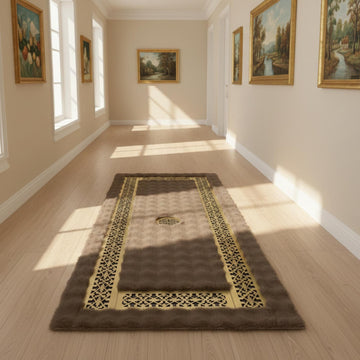
A smaller natural hide or a narrow runner-style patchwork rug works well in hallways and entryways. Cowhide's natural resistance to dirt and ease of cleaning make it particularly practical in high-traffic zones.
Styling Your Cowhide Rug: Interior Design Pairings That Work

One of the most frequently asked questions we hear is whether cowhide rugs suit a particular interior style. The short answer: virtually all of them. The longer answer requires understanding what each style demands.
Modern and Minimalist Interiors
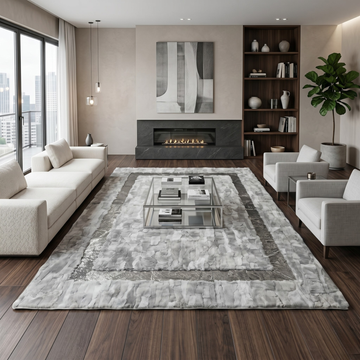
A solid black, white, or salt-and-pepper cowhide works brilliantly in minimalist spaces. The organic shape breaks up geometric precision without introducing competing patterns. Keep everything else clean and spare; the hide becomes the one deliberate layer of texture in the room.
Modern Farmhouse and Transitional
This is where cowhide is entirely at home. Tricolour, brindle, and chocolate-and-white hides complement the warm neutrals, wood tones, and linen textures of farmhouse interiors perfectly. Pair with reclaimed wood furniture and soft cotton throws for a coherent layered look.
Bohemian and Eclectic
Patchwork cowhide rugs, particularly chevron, diamond, or multi-tone designs, suit eclectic and bohemian interiors well. Layer a smaller natural hide over a larger jute or flat-woven rug for depth and textural interest.
Contemporary Luxury
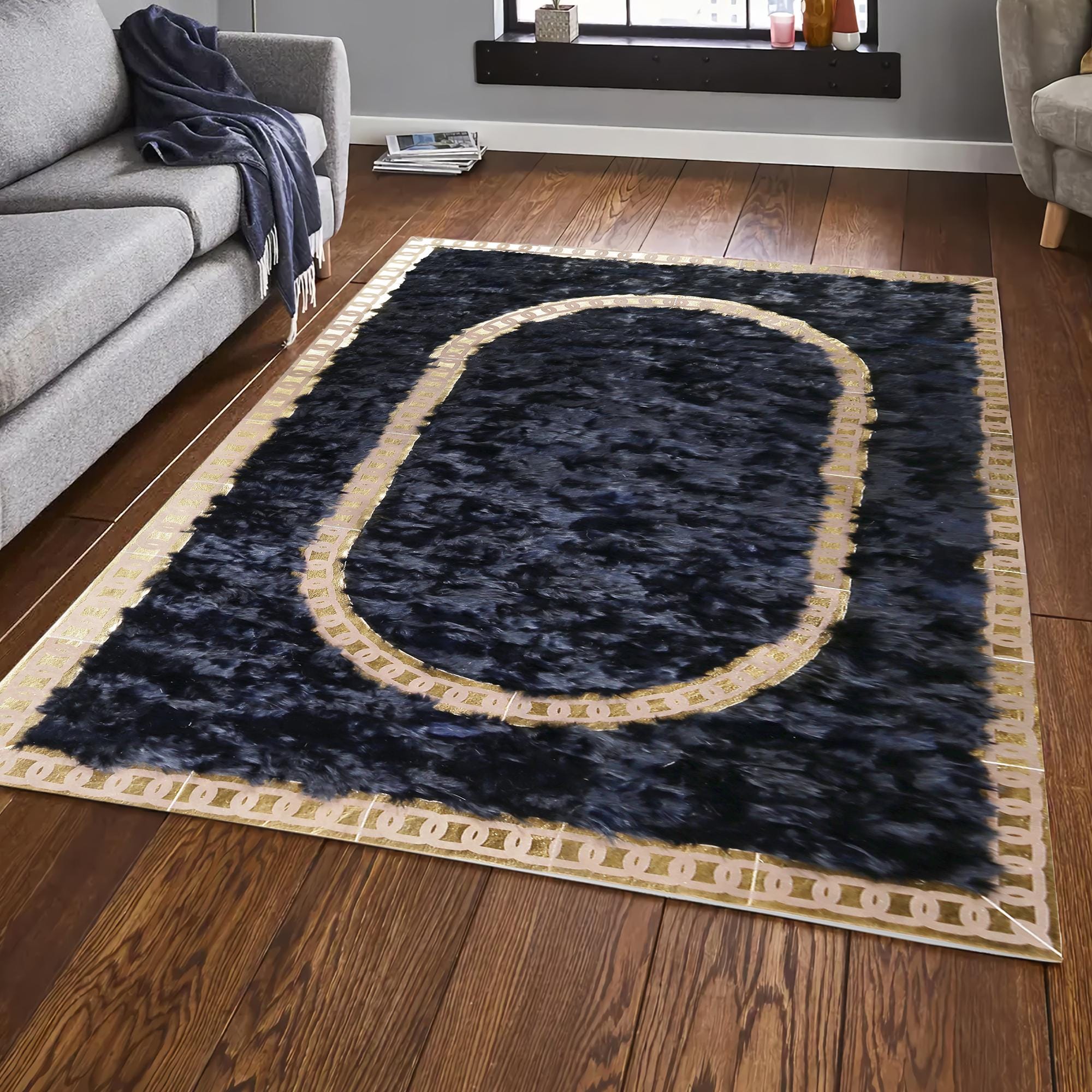
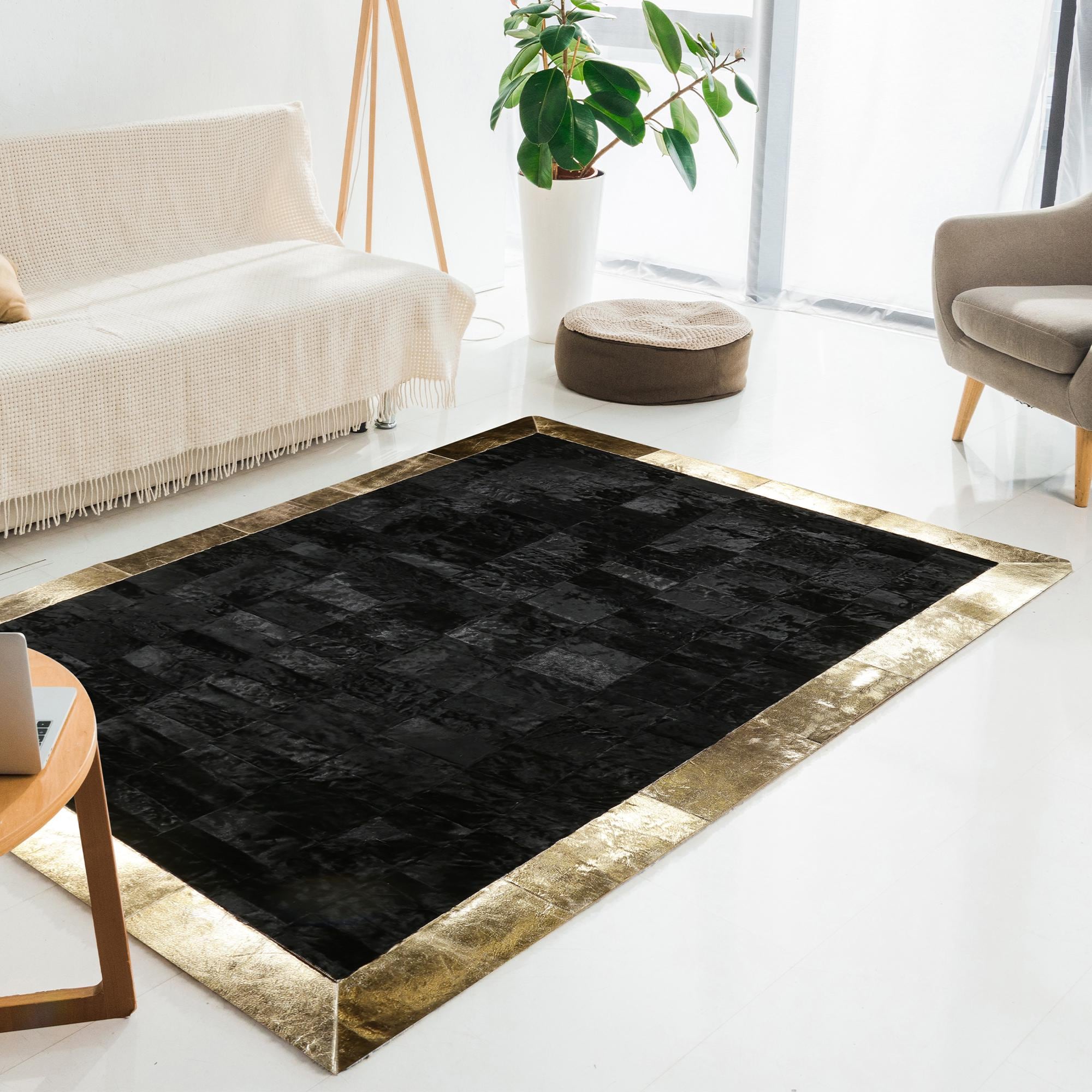
For high-end contemporary rooms, consider a metallic-toned cowhide or a bold black-and-white patchwork as the anchor piece. Pair with clean-lined furniture in dark wood, marble surfaces, and statement lighting. The cowhide adds the organic counterpoint that stops luxury spaces from feeling cold.
How Long Do Cowhide Rugs Last?
If there's one thing that surprises first-time buyers, it's the lifespan of a well-made cowhide rug. Properly cared for, a quality hide will last 15 to 20 years or more, far outlasting most textile, synthetic, or wool alternatives.
The reason is simple: leather is one of the most durable natural materials humans have ever used. It doesn't fray. It doesn't pill. Its natural oils resist stains and moisture. And unlike woven rugs, it doesn't hold onto grit and debris that gradually cuts fibres from the inside out.
What Shortens a Cowhide's Life?
- Direct, prolonged exposure to sunlight, UV radiation degrades the pigments and dries out the hide. Keep rugs at least 3 - 4 feet from south-facing windows, or use UV-filtering window film.
- Moisture exposure, cowhides are naturally water resistant, but prolonged damp conditions can cause the leather backing to stiffen or mildew. Never leave a wet cowhide rolled up.
- Incorrect cleaning, harsh chemicals, or steam cleaning damage the leather structure. Always use gentle, hide-specific cleaning methods.
-
Poor quality tanning, low-grade hides are processed quickly and lack the structural integrity of premium Brazilian or European hides. This is the most common cause of premature deterioration.
How to Clean a Cowhide Rug: The Essential Care Guide

The good news: Cowhide rugs are significantly easier to maintain than most people expect. Their natural oils repel surface dirt and spills, and they don't require professional cleaning for routine upkeep.
Everyday Maintenance
- Vacuum gently on a low-suction setting, moving in the direction of the hair. Do not use a rotating brush attachment; it can pull hair from the hide.
- Shake the rug outdoors periodically to dislodge dust and surface debris.
- Spot clean spills immediately by blotting (never rubbing) with a clean, damp cloth. Work from the outside of the spill inward to prevent spreading.
Deep Cleaning
For a deeper clean, use a solution of warm water and very mild soap (a small drop of baby shampoo or leather cleaner works well). Apply sparingly with a damp cloth, always working in the direction of the hair. Allow to dry naturally in a well-ventilated area, away from direct heat sources.
What to Avoid
- Never machine wash or tumble dry; water saturation causes the backing to stiffen permanently.
- Avoid harsh chemical cleaners, bleach, or carpet shampoos; they strip the hide's natural oils.
- Never use a steam cleaner; the heat and moisture combination is particularly damaging to leather.
Are Cowhide Rugs Ethical? Sourcing & Sustainability Explained
This is a question that deserves a straight, honest answer, and it's one many brands sidestep. At Karelias & Sons, we don't.
The fundamental point is this: cowhide rugs are a byproduct of the meat industry. The animals from which hides come are raised for beef, not for their skin. Without the rug and leather goods industry, those hides would be discarded as waste. Choosing a cowhide rug is, in that sense, a more sustainable choice than purchasing a synthetic alternative, as it uses a part of the animal that would otherwise go to landfill.
👉 For a deeper look at sourcing standards, tanning practices, and how to evaluate a brand's ethics before you buy, read our dedicated article on are cowhide rugs ethical.
What Ethical Sourcing Actually Looks Like
Not all hides are sourced equally. The key things to look for when evaluating a brand's practices:
- Transparency about country of origin, Brazilian and European hides are held to higher standards of animal husbandry than those in some other regions.
- Tanning method, vegetable tanning uses plant-based processes and is more environmentally sound than some chrome-tanning alternatives, though both are widely used.
- No additional cattle farming solely for hides, any reputable supplier will confirm their hides are byproducts of the food industry.
What About Faux as an Ethical Alternative?
Synthetic rugs avoid animal products, but they come with their own environmental costs. Most faux hides are made from polypropylene or polyester, both petroleum-based plastics that do not biodegrade and shed microplastics over their lifespan. For buyers concerned about environmental impact, a long-lasting genuine cowhide rug may represent a more sustainable choice over its full lifetime than multiple synthetic replacements.
How to Spot a High-Quality Cowhide Rug Before You Buy

The market includes everything from premium, hand-selected hides to cheaply processed imports. Knowing the difference before you buy saves you money, disappointment, and a return shipping label.
Signs of a High-Quality Hide
- Soft, supple backing, the leather underside of a quality hide should feel like soft suede. A stiff, sandpaper-like backing indicates poor or rushed tanning.
- Thickness, quality hides are between 3mm and 6mm thick. Thin, flimsy hides curl at the edges and wear quickly.
- Hair quality: The hair should feel smooth and lie flat in one direction. Excessive shedding on a new rug is a sign of poor tanning.
- Grade A selection, reputable suppliers hand-pick only the top 10 - 15% of available hides. This means consistent colour, symmetrical shape, and minimal scars or blemishes (note: natural marks are not defects, they're proof of authenticity).
- Country of origin, Brazilian hides are widely regarded as the global benchmark for quality, followed by quality European hides. Ask your supplier directly.
Questions to Ask Before You Buy
- Can you tell me where the hide was sourced and tanned?
- Is this a Grade A hide?
- What is the approximate size range for this hide?
- Is this an individually photographed hide, or will I receive 'one similar to pictured'?
At Karelias & Sons, every rug is individually handcrafted and photographed; what you see is what you receive.
Cowhide Rug Price Guide: What to Expect at Each Budget Level
Cowhide rug prices vary significantly, and the range reflects real differences in quality, sourcing, and craftsmanship. Here's an honest guide to what you're paying for at each level.
Budget Range: Under $150
At this price point, you're almost certainly looking at a faux cowhide or a very low-grade genuine hide that has been poorly tanned. Expect thin material, quick deterioration, and colours that fade within a year or two. These are fine for short-term use or rental properties where longevity isn't the priority.
Mid-Range: $150 - $400
This is where genuine quality begins. You'll find medium-grade real hides, well-processed, in standard natural patterns. Patchwork rugs at this price point can be a good value if the stitching is tight and the hides are consistent. Expect a lifespan of 5 - 10 years with proper care.
Premium: $400 - $800+
Premium hides are Grade A, hand-selected, individually photographed, and often custom-sized. At Karelias & Sons, our handmade leather rugs fall into this category. Each piece is individually crafted and carries our quality guarantee. Properly maintained, expect a lifespan of 15 - 20 years. On a cost-per-year basis, a premium hide often works out cheaper than replacing mid-range rugs every 3 - 5 years.
Frequently Asked Questions
Are cowhide rugs good for high-traffic areas?
Yes, cowhide is one of the most durable natural flooring materials available. Its dense, tight hair structure resists crushing, and the leather backing withstands foot traffic without fraying or matting. It's well-suited for living rooms, hallways, and dining areas.
Are cowhide rugs hypoallergenic?
Yes. Unlike wool or synthetic pile rugs, cowhide does not trap dust mites, pet dander, or pollen within its fibres. This makes it one of the better flooring choices for allergy sufferers. Regular vacuuming and occasional shaking keep it virtually allergen-free.
Can I use a cowhide rug on the carpet?
Yes, but use a non-slip underlay or rug pad between the cowhide and the carpet surface to prevent movement. Avoid placing cowhide on thick, high-pile carpet; the rug will move too easily and may curl at the edges.
Do cowhide rugs smell?
A quality, well-tanned cowhide has a very subtle, pleasant leather scent that dissipates within a few days of unpacking. If a rug has a strong chemical smell, it may indicate poor tanning practices. Unpleasant odours are a red flag.
Can cowhide rugs be used outdoors?
Cowhide rugs are not designed for outdoor use. They're not waterproof, and prolonged exposure to moisture, direct sunlight, and temperature changes will degrade the leather backing rapidly. They are suitable for covered porches or sunrooms with controlled humidity, but not for open exterior spaces.
What's the best rug pad to use under a cowhide rug?
Use a natural rubber, non-slip rug pad without adhesive backing. Avoid felt pads, which can hold moisture against the hide. The pad should be slightly smaller than the rug on all sides so it remains invisible.
Can cowhide rugs be repaired if they tear or develop bald spots?
Minor tears can be repaired by a leather specialist. Small bald spots from shedding are generally not repairable, but quality hides shed very little once the initial few weeks of use have passed. If excessive shedding occurs on a new rug, it typically indicates poor tanning. Contact your supplier.
Ready to Find Your Perfect Cowhide Rug?
A well-chosen cowhide rug is an investment you'll still appreciate in twenty years. It ages gracefully, it's practical for everyday life, and there is genuinely no manufactured product that can replicate what a natural hide brings to a room.
At Karelias & Sons, every rug in our collection is individually handcrafted, selected, cut, stitched, and inspected by hand. We offer natural cowhide area rugs, patchwork designs, round rugs, rabbit fur, fox fur, Tuscan leather, and more, all available in custom sizes with free worldwide shipping.
About This Article
Written by the Karelias & Sons team, craftspeople with decades of experience handmaking leather and hide rugs. Every piece of advice in this guide is based on the actual materials, processes, and customer questions we encounter every day.