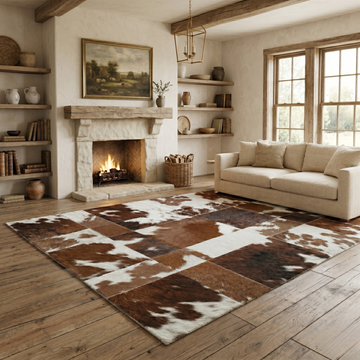
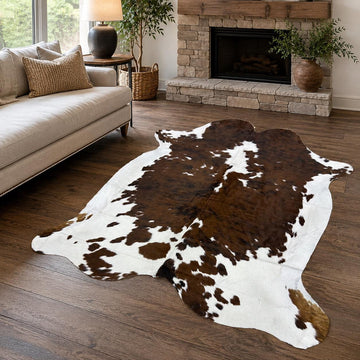


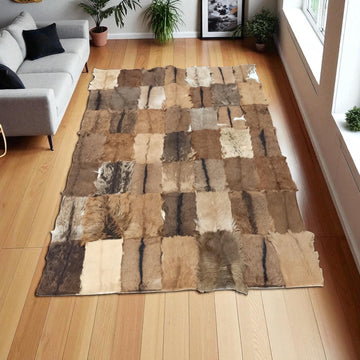


This is one of the most searched questions in the cowhide rug category, and one that deserves a genuinely honest answer. Most brands will naturally steer you toward whatever they sell. We sell both genuine hides and plush faux alternatives, so we have no agenda here.
The real cowhide rug vs faux question isn't about which is better in absolute terms; it's about which is right for your household, your values, and your budget. Here's what you actually need to know.
In this guide:
- What makes a genuine cowhide rug what it is
- The honest case for faux cowhide
- Side-by-side comparison: durability, feel, maintenance, ethics, cost
- How to tell them apart in person
-
Who should choose which
What Is a Genuine Cowhide Rug?

A real cowhide rug is made from the complete skin of a cow, treated through a tanning process that preserves the leather and the natural hair. The result is a material that retains all the organic characteristics of the original animal: unique markings, directional hair, natural variation in thickness and texture.
No two genuine hides are identical. The pattern you receive is determined entirely by nature, which is precisely the appeal for buyers who value authenticity and uniqueness.
👉 For a deeper look at hide grades, durability, styling, and placement ideas, explore our detailed guide to cowhide rugs.
How Genuine Hides Are Made
The tanning process is critical to quality. There are two main methods:
- Vegetable tanning: uses plant-based tannins (oak bark, mimosa, chestnut). Slower and more expensive, but produces a firmer, more durable leather with a richer patina over time.
- Chrome tanning: uses chromium salts. Faster and more widely used. Produces a softer, more pliable hide. The vast majority of commercial cowhide rugs are chrome-tanned.
At Karelias & Sons, we select only Grade A hides from our tannery suppliers, meaning the top 10–15% of available hides, chosen for consistent colour, symmetrical shape, and minimal imperfections.
What Is a Faux Cowhide Rug?

Faux cowhide rugs are manufactured from synthetic materials, typically polyester, polypropylene, or acrylic, with a printed cow-pattern surface and a fabric or canvas backing. High-quality faux rugs can be visually convincing from a distance, particularly in the popular black-and-white patchwork style.
More recently, plush faux rugs have emerged as a distinct category, using deep, soft pile constructions that prioritise tactile comfort over visual imitation of real hide.
Side-by-Side Comparison
|
Factor |
Genuine Cowhide |
|
Durability |
15–25 years with proper care |
|
Texture / Feel |
Smooth, directional hair. Unique, every piece. |
|
Pattern |
100% unique, no two hides identical |
|
Hypoallergenic |
Yes, does not trap dust or dander |
|
Maintenance |
Easy, blot spills, vacuum, shake |
|
Backing |
Soft suede-like leather |
|
Price Range |
$150–$800+, depending on grade and size |
|
Ethical profile |
Byproduct of the meat industry; biodegradable |
|
Lifespan cost |
Low, one purchase lasts 15–25 years |
|
Factor |
Faux / Plush Cowhide |
|
Durability |
2–7 years before flattening/fading |
|
Texture / Feel |
Varies, good faux can feel soft, cheap faux feels plastic |
|
Pattern |
Printed, will look similar to other faux rugs |
|
Hypoallergenic |
No, synthetic fibres can trap allergens |
|
Maintenance |
Easier for liquid spills; harder to deep clean |
|
Backing |
Woven canvas or non-slip fabric |
|
Price Range |
$30–$300 |
|
Ethical profile |
No animal products; made from petroleum-based plastic |
|
Lifespan cost |
Higher, multiple replacements over the same period |
The Honest Case for a Real Cowhide Rug
Genuine hides offer something no synthetic material can: each piece is entirely its own. The organic variation in pattern, the directional quality of the hair, the way the leather develops a deeper patina over years of use, these are qualities that accumulate, not depreciate.
From a practical standpoint, real cowhide is more hypoallergenic than faux, more durable over its lifetime, and biodegradable at the end of its life. On a per-year cost basis, a quality genuine hide almost always works out cheaper than replacing faux alternatives every few years.
The Honest Case for Faux Cowhide
A faux cowhide rug is the sensible choice when:
- You have strong ethical objections to animal products
- The rug will be in a space where it's likely to be heavily soiled (young children's rooms, garages, outdoor-adjacent areas)
- You're renting and need an easily replaceable, lower-investment option
- Your budget is limited, and you want the aesthetic at a lower price point
The key caveat: at the lower price points, faux cowhide rugs look cheap and don't last. If you're going faux, invest in a quality plush option; it will serve you far better than the cheapest available alternative.
How to Tell Genuine from Faux in Person

- Flip the rug over: Real cowhide has a soft, suede-like leather backing. Faux has a woven or canvas backing.
- Run your hand against the direction of the hair: Genuine cowhide has a distinct, firm directional quality. Faux feels uniform regardless of direction.
- Look at the edges: A whole genuine hide has an organic, irregular outline. Faux is usually perfectly rectangular.
- Check the pattern: A genuine hide's pattern flows naturally and is completely unique. A faux rug's print repeats or has the characteristic flatness of a fabric print.
- Smell it: Quality genuine cowhide has a subtle, clean leather scent. Cheap faux rugs may smell of synthetic treatment.
Our Honest Recommendation
For most buyers who want a rug that will last, age well, and genuinely elevate a space, choose genuine cowhide. The investment is higher upfront, but the lifetime value is significantly better.
If ethics or specific lifestyle circumstances point you toward faux, invest in quality, specifically in a plush option with a higher pile density and a dense backing. Avoid the bargain end of the faux market entirely
FAQ
Is it obvious when a cowhide rug is faux?
A high-quality faux can fool the eye from a few feet away, particularly in printed black-and-white designs. Up close, the uniformity of the print, the canvas backing, and the feel of the pile will reveal the difference.
Are genuine cowhide rugs cruel?
Genuine cowhide rugs are a byproduct of the beef industry; the animals are not raised specifically for their hides. For a detailed look at the ethics, read our dedicated article on whether cowhide rugs are ethical.
Can faux cowhide rugs look as good as real ones?
In photographs and from a distance, yes. In person, a discerning eye will notice the difference. A quality faux rug can look genuinely stylish; an inexpensive one rarely does.
About This Article
Written by the Karelias & Sons team, craftspeople with decades of experience handmaking leather and hide rugs. Every piece of advice in this guide is based on the actual materials, processes, and customer questions we encounter every day.