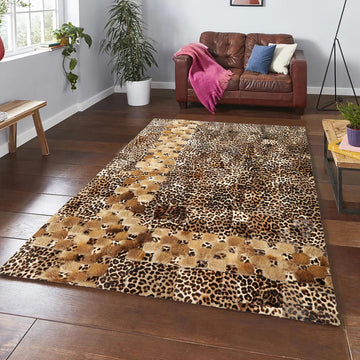

You have chosen the perfect cowhide area rug. Now comes the part that most people underestimate: where and how you place it determines whether it transforms the room or simply sits on the floor.
Cowhide rug placement follows different principles from conventional rugs. Their organic, irregular shapes give you more creative latitude but also require more thoughtful positioning. This room-by-room guide covers the professional rules and the creative approaches that make a cowhide look truly intentional.
In this guide:
- The 8-inch floor border rule
- Living room placement: front legs, full coverage, and angling
- Bedroom placement: the luxury underfoot approach
- Dining room placement: the 24-inch rule
- Entryway and hallway positioning
- Home office placement
- Wall placement: the unexpected option
- ayering rugs with a cowhide on top
The 8-Inch Floor Border Rule
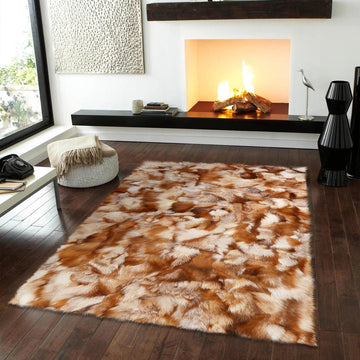
Before placing any rug in any room, this fundamental rule applies: leave at least 8 inches of visible floor space between the edge of your rug and the walls.
This breathing room tells the eye where to land. It creates the visual impression that the rug was placed deliberately, like a frame around a photograph. Without it, the rug looks as if it is trying to escape the room. The ideal border is between 8 and 24 inches, depending on room size.

✦ Designer Tip
Counterintuitively, leaving more floor space around your rug makes the rug look larger, not smaller. The border creates a visual context that emphasises the rug's presence in the room.
Living Room Placement
Option 1: The Front-Legs Approach (Most Popular)

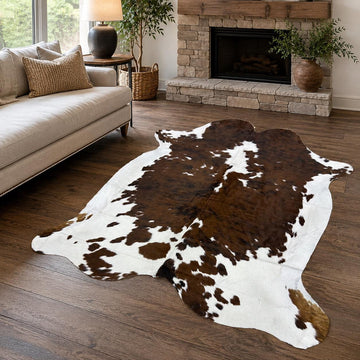
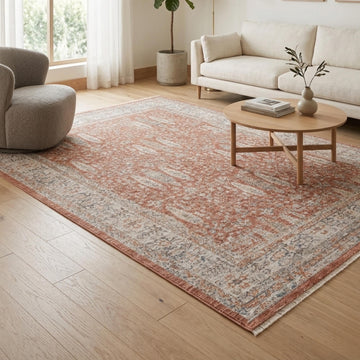
Position the rug so the front legs of all main seating pieces, including the sofa and armchairs, rest on it. The back legs remain off. This technique anchors the seating group into a defined conversation zone without requiring a very large rug.
This is the most common approach for medium-sized living rooms and works beautifully with natural cowhide hides. The coffee table sits fully on the rug, creating a clear visual anchor.
Option 2: All Legs On

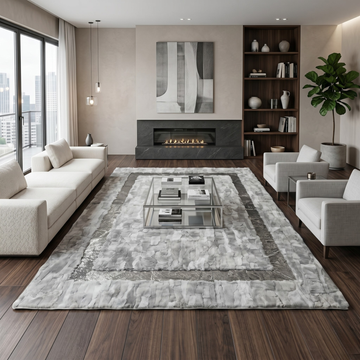
In larger living rooms, all furniture legs, including sofa back legs, rest on the rug. This creates a more formal, contained composition. It typically requires a larger hide of 8 by 9 feet or above, or a custom patchwork rug.
The Angle Approach
Natural cowhide rugs look particularly beautiful when placed at a slight angle of approximately 15 to 30 degrees off-square. This works because the irregular organic shape looks more intentional at an angle than when placed perfectly straight. Try positioning the hide diagonally under a coffee table and see how the room comes to life.
Bedroom Placement

The Classic Under-Bed Position
The best place for a luxury cowhide area rug in a bedroom is under the bed. Place it so it extends about two-thirds under the bed frame. Let it stick out 18 to 24 inches on both sides and at the foot. This creates the hotel-luxury moment where your feet land on warm, soft hide the instant you step out of bed.
Foot-of-Bed Placement
A smaller natural hide or round rug positioned perpendicular to the foot of the bed creates a boutique-hotel layered effect. Pair with a small bench for a complete, designer-finished look.
Bedside as a Landing Zone
Two smaller hides, or a matching pair of round hides, placed on either side of the bed serve as bedside rugs. This approach suits very large master bedrooms with a king or super-king bed, where a single large rug would be lost.
The Angled Bedroom Placement
One of the most striking approaches is to place the hide at a 45-degree angle under the bed, with one corner pointing out toward the room. The diagonal creates energy and movement that a straight placement does not achieve. This works particularly well with tricolour and brindle natural hides.
Dining Room Placement

One rule above all others for dining room cowhide placement: ensure all four table legs and all chair legs remain on the rug even when chairs are pulled out for sitting.
If chairs slide off the rug's edge every time someone sits down, it creates both frustration and uneven wear on the rug. Measure your table, add at least 24 inches on every side, and size accordingly.
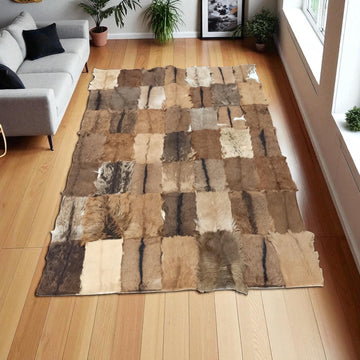
Patchwork cowhide rugs are often the better choice for dining rooms because their rectangular form sits more cleanly under rectangular tables than the irregular outline of a whole natural hide.
Entryway and Hallway Placement

Cowhide is one of the best materials for entryways. It is naturally stain-resistant and easy to clean, and its low profile means a front door opens freely over it without catching.
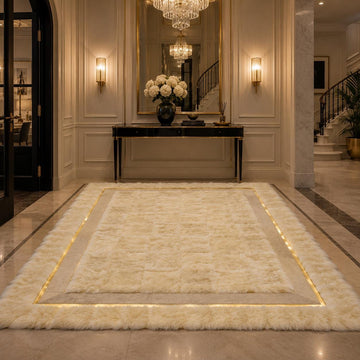
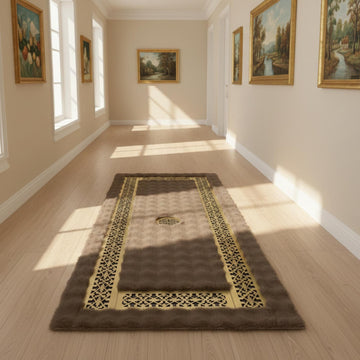
For a standard entryway, a small natural hide of 3 by 4 feet to 4 by 5 feet, placed in the centre of the space with the natural shape's broadest point facing the door. creates a welcoming and well-proportioned look. A longer, narrower patchwork runner works well in hallways.
Home Office Placement
For home offices, position the rug so the desk chair rolls entirely on it in all directions, including when leaning back. Allow at least 24 inches behind the chair. A hide that is too small will cause the chair to constantly roll on and off the edge, which is both annoying and damaging to the rug over time.
A natural or patchwork cowhide under a standing desk adds warmth and tactile interest to what can otherwise be a sterile workspace.
Wall Placement: The Unexpected Option
A cowhide rug mounted as a wall hanging is one of the most dramatic interior design moves available to you. A large tricolour or brindle natural hide behind a bed serves as an organic headboard, adding texture, dimension, and character that no traditional headboard achieves.
Mount using a thin strip of timber attached to the wall, folding the top edge of the hide over it. The hide will drape naturally. No permanent hardware is required.
Layering Rugs with Your Cowhide on Top
One of the most impactful and versatile styling techniques is to place your cowhide on top of a larger, flat-weave neutral base rug such as jute, sisal, or flat-woven wool. The base rug defines the zone while the cowhide adds texture and focal interest on top.
The key rules for successful rug layering:
- The base rug should be significantly larger than the cowhide, with at least 12 inches visible on all sides.
- The base rug should be neutral and low-pile. High-pile base rugs will cause the cowhide to sit unevenly and curl at the edges.
- Secure both rugs with a non-slip pad to prevent movement.
👉 For a full breakdown on sizing, styling, and buying decisions, read our complete cowhide rugs buying guide before choosing your rug.
Frequently Asked Questions
Should a cowhide rug be placed on the floor straight or at an angle?
Both work. Angling a natural cowhide slightly, between 15 and 30 degrees, often produces a more dynamic and intentional look than perfectly straight placement. Experiment before committing to a final position.
Can I put a cowhide rug on the carpet?
Yes, but use a non-slip rubber underlay between the hide and the carpet to prevent movement. Avoid placing on thick, high-pile carpet as the hide will shift constantly and may curl at the edges.
Is it okay to place a cowhide rug in a high-traffic area?
Yes. Cowhide is one of the most durable rug materials available and handles foot traffic very well. Rotate the rug 180 degrees every 3 to 6 months to distribute wear evenly.
About This Article
Written by the Karelias & Sons team, craftspeople with decades of experience handmaking leather and hide rugs. Every piece of advice in this guide is based on the actual materials, processes, and customer questions we encounter every day.